I am Italian, and even if it sounds like a cliché, yes, food is deeply engraved in our souls.
Growing up, what I ate was never just food. It came with feelings, family, stories and very specific places. Some of my strongest memories are of cooking with my Nonni: homemade ravioli, gnocchi, tagliatelle, lasagne. I was lucky enough to have my Nonna Elena from Emilia-Romagna, a region where fresh pasta is almost a language of its own.
Food always seemed to belong somewhere.
I grew up close to a town literally called Gorgonzola, which also happens to produce my favourite cheese. Across Italy, so much of what we eat is connected to a particular region, landscape or tradition. We even have endless labels — DOP, IGP, DOC — telling us that something comes from this place, was made in this way, and carries this particular history.
Of course, I don’t want to romanticise it. There is exploitation, intensive agriculture and plenty of damage to the land in Italy too. But there is one part of our food culture that I have always loved: the idea that food can tell you something about where you are.
When I first arrived in Australia, I was young and, honestly, pretty ignorant. I knew very little about the history of this Country. I discovered Sydney partly through food, but many of the stories I encountered were familiar migrant stories: Italian, Greek, Vietnamese, Lebanese, Chinese and so many others. They told me a lot about the people who had made this city their home.
But eventually I started wondering about the food stories that began here.
What grows naturally on this land? What did people eat here before the ingredients I recognised arrived? What can a plant tell us about Country, seasons, waterways and culture?
I am still learning, and I have a lot to learn. Native plants and First Nations food knowledge are around us, but for a long time I barely knew how to see them. And the more I learn, the more I realise that discovering these ingredients isn’t just about finding something new to eat. It means listening to the people whose knowledge of this Country goes back thousands of generations.
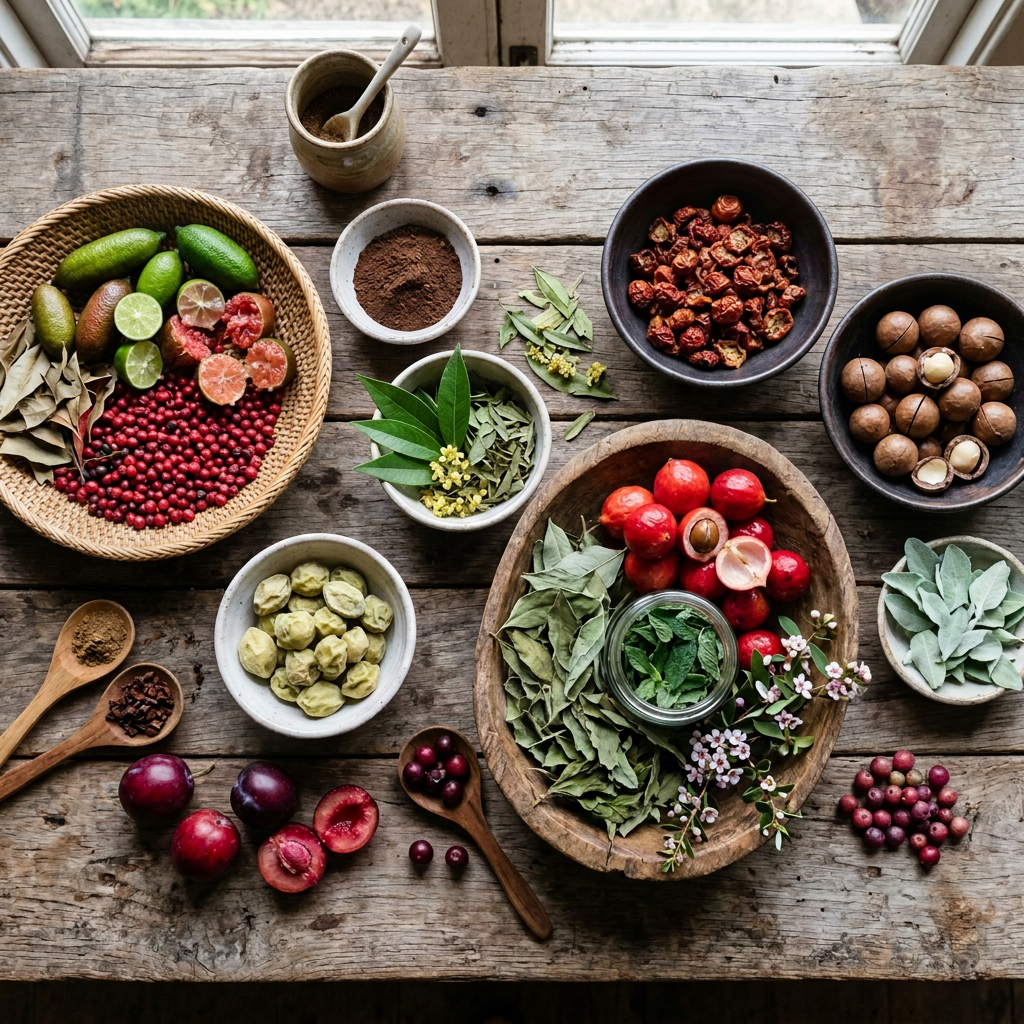
On Gadigal Country, plants such as lilly pilly, warrigal greens, native mint, pigface and geebung are part of a landscape and food story that existed long before the city around them.
They have been known, used and cared for here for a very long time.
So this isn’t me trying to teach you about native food. I couldn’t.
It’s me trying to learn.
To listen to First Nations voices, understand more about the Country I now feel connected to, and discover this place through something I have always understood instinctively: food.
Knowing a place can also begin by learning what grows there.
.
Why this matters
Learning what naturally grows in a place is another way of getting to know it. Native plants support biodiversity, but they also carry stories, knowledge and culture. By noticing what belongs to the land, we can start discovering the stories the land has been telling all along.


Any thoughts?